How Long Should Your Sales Cycle Be?
Knowing exactly how long it takes to turn a prospect into a customer is critical for any business. Your sales cycle, the time from the first interaction to a closed deal, not only tells you how predictable your revenue is but also helps you pinpoint where you can improve your process.
In this post by Revelation Marketing, we’ll explore what a sales cycle is, how to measure its length, the factors that influence it, and best practices to optimize every stage of the journey.

What Is the Sales Cycle?
At its core, the sales cycle is the repeatable process your sales team follows to convert leads into paying customers.
It’s the journey from the very first touch with a potential client until they sign on the dotted line and even beyond with Google My Business, as you nurture the relationship.
Understanding this process gives you the roadmap to success, helping you know where each lead stands and what to do next.

Defining Average Sales Cycle Length
The average sales cycle length is the number of days from your initial contact with a prospect until you close the deal, averaged across all your successful deals. Here’s how to calculate it in two simple steps.
- Total Days Calculation: Add up the number of days it took to close each deal.
- Divide by Total Deals: Divide that sum by the number of deals closed.
This simple formula gives you a clear picture of how long, on average, it takes to secure a sale. Knowing this number helps set realistic expectations for forecasting revenue and managing resources and animations.

Why Sales Cycle Length Matters
- Predictability: When you know your average sales cycle, you can forecast future sales more reliably. For example, if your cycle is 102 days, you can estimate which leads will convert and when helping you plan staffing, inventory, and cash flow.
- Bench-marking and Improvement: Understanding your sales cycle lets you compare different segments. Does selling to a small business take less time than to an enterprise? Do inbound leads convert faster than outbound prospects? By segmenting your data, you can identify bottlenecks and target areas for improvement.
- Goal Setting: Shortening your sales cycle is often a key performance indicator (KPI) for growing revenue. If you can reduce the cycle time, you’ll be able to close more deals faster, accelerating overall revenue growth.

Factors Influencing Sales Cycle Length
- Type of Customer: Small and medium-sized businesses (SMBs) generally have shorter cycles, while enterprise sales often take longer due to more complex decision-making processes.
- Product Complexity: Off the shelf products are quicker to sell compared to customized solutions, which require more discussions and negotiations.
- Lead Source: Inbound leads (from your website, referrals, or content marketing) tend to have shorter cycles because these prospects already show interest. Outbound methods like cold calling or unsolicited emails usually take longer.
- Market Conditions: External factors like economic shifts, industry trends, or even seasonal changes can lengthen or shorten the sales process.

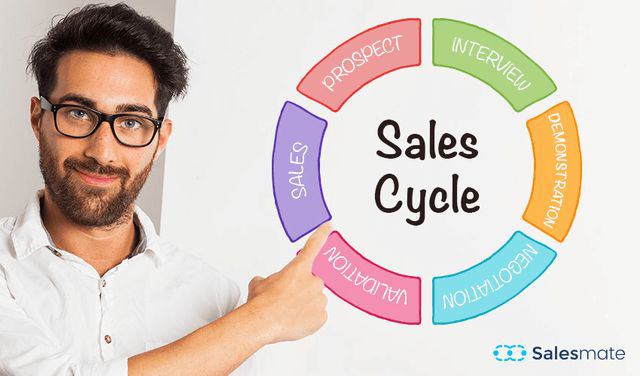
Breaking Down the Sales Cycle: The 7 Stages
- Finding Leads: Identify potential customers by understanding your ideal buyer. Use various methods—from cold calls and emails to social media engagement to gather a list of prospects.
- Connecting with Leads: Reach out to your prospects with a personalized approach. Focus on building trust by sharing useful information rather than pushing a sale right away.
- Qualifying Leads: Determine which leads have both the need and the budget for your product or service. A simple checklist can help: Are they interested? Do they have the resources? Are they decision-makers?
- Presenting to Prospects: Once qualified, it’s time to show how your offering can solve their problems. This stage might involve a demo, a meeting, or a detailed presentation.
- Overcoming Objections: Prospects may have concerns about price, competition, or fit. Use these objections as opportunities to reinforce your value proposition and differentiate your offering.
- Closing the Deal: This is the moment when you secure the commitment. Whether you use an assumptive close, a suggestion close, or create urgency with a limited-time offer, your goal is to turn a prospect into a customer.
- Nurturing New Customers: Even after the sale, continue to invest in your customers. Provide onboarding support, follow-up check-ins, and offer additional resources that encourage repeat business and referrals.

Best Practices for Optimizing Your Sales Cycle
- Track Conversion Rates: Measure how many leads move from one stage to the next. This helps identify stages where prospects drop off and where improvements are needed.
- Use a CRM System: Tools like Zendesk Sell can organize your leads, track interactions, and help manage the entire sales process. A good CRM provides insights into cycle length and conversion rates, making it easier to address inefficiencies.
- Align Sales with the Customer Journey: Map out the customer journey from awareness to purchase, and tailor your communication and offers to meet their needs at every stage. For example, provide educational content during the early stages and personalized demos during the decision phase.
- Automate with AI: AI tools can handle routine tasks like drafting follow-up emails, scheduling appointments, and even predicting which leads are most likely to close. This reduces manual work and speeds up the process.
- Invest in Training: Continuous training for your sales team is essential. Regular workshops, feedback sessions, and technology updates help your team adapt to new methods and improve their performance.
- Maintain the Human Touch: While automation can speed up your workflow, building genuine relationships with prospects is irreplaceable. Listen actively, ask insightful questions, and tailor your communication to individual needs.

The Significance of Knowing Your Sales Cycle Length
Understanding your sales cycle isn’t just about keeping track of numbers, it’s about optimizing your entire sales process.
Every product or service has its own “life cycle,” and mastering your sales cycle means you’re in control of how quickly and efficiently you can generate revenue. This knowledge allows you to:
- Set realistic revenue forecasts.
- Identify which parts of your process need improvement.
- Allocate resources more effectively.
- Ensure that your team is consistently moving prospects through the pipeline.
- Become a marketer with our marketing training

Frequently Asked Questions
1. What is sales cycle management?
Sales cycle management is the continuous process of analyzing and refining each stage of your sales cycle to improve efficiency and increase revenue.
2. How long should my sales cycle be?
The ideal length varies by industry and product type. For many B2B companies, an average of 102 days from lead to close is common, but your cycle might be shorter or longer based on your target market and sales strategy.
3. How do I reduce my sales cycle length?
Focus on improving conversion rates at each stage, automate routine tasks, invest in sales training, and ensure your communication aligns with the customer journey.
Final Thoughts
A well-managed sales cycle is a roadmap to success. It gives you predictability in forecasting revenue, highlights areas for improvement, and ultimately drives better business performance.
By understanding each stage, from finding leads to nurturing long-term customers and continuously refining your process, you can shorten your sales cycle and boost your conversion rates.
Remember, the key isn’t just to work harder but to work smarter and marketing is all you need! Embrace technology like CRM systems and AI to streamline processes, but never lose the personal touch that builds lasting relationships.
With a clear strategy and a commitment to ongoing improvement, you can ensure that your sales cycle is not only efficient but also a powerful driver of growth for your business.